


The Blue Ribbon 323 “Rosette Back” Playing Cards revive a classic American deck with the feel and function of a modern worker. Originally introduced over a century ago, Blue Ribbon was designed as a refined everyday pack for serious card players, and this 2018 red‑and‑blue reprint brings that same spirit back to the table. Whether you’re dealing poker, running magic, or simply enjoy traditional card aesthetics, this deck turns ordinary games into a small ritual of craftsmanship and history.
An Early 20th‑Century Classic Reborn
Blue Ribbon first appeared in 1916, during an era when American playing cards were shifting from simple stencils to elaborate “bank‑note” style engraving. The deck sat alongside other premium lines from the United States Playing Card Company, aimed at clubs, casinos, and card rooms that wanted something finer than a generic store brand. Over time, original Blue Ribbon decks became scarce, living on mostly in the collections of enthusiasts who prized their delicate rosette back and ribbon‑seal branding. The 2018 project set out to change that—not by reimagining Blue Ribbon, but by putting an authentic version back into players’ hands.
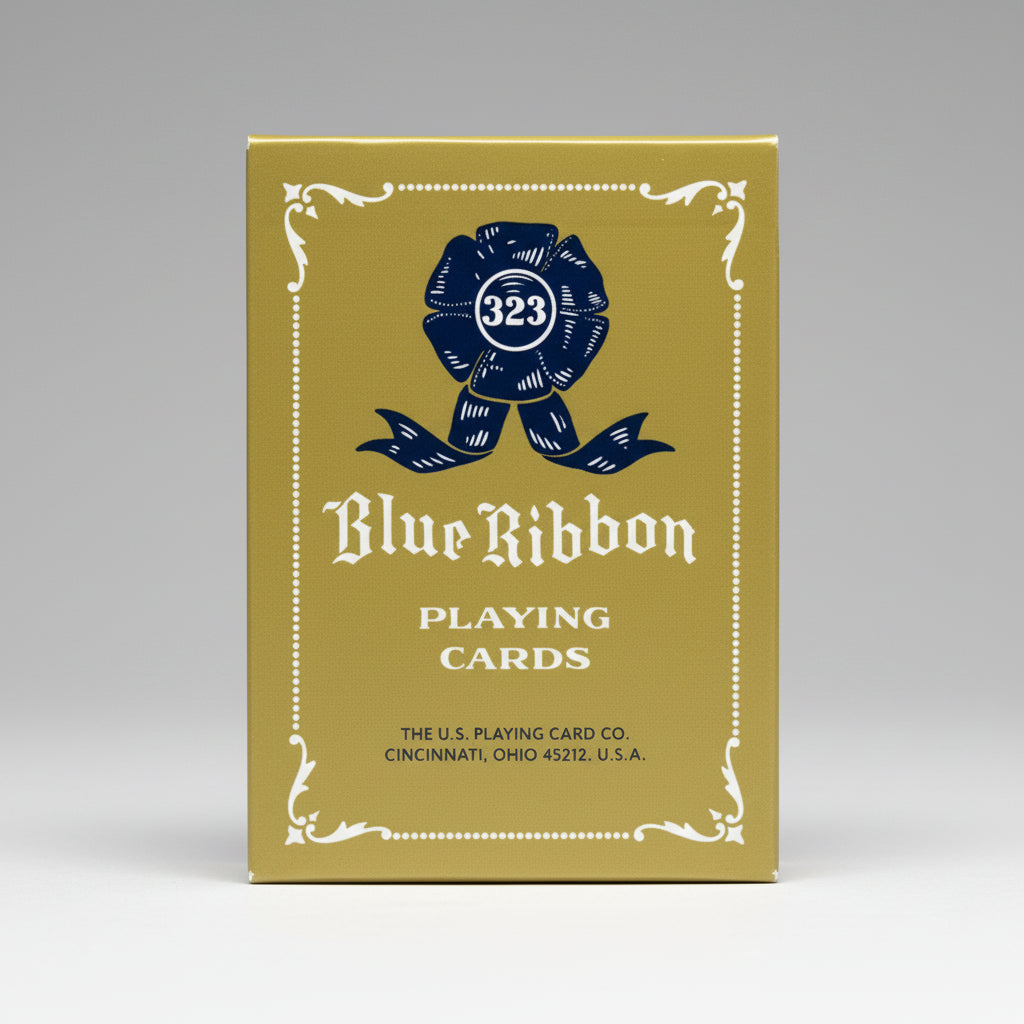
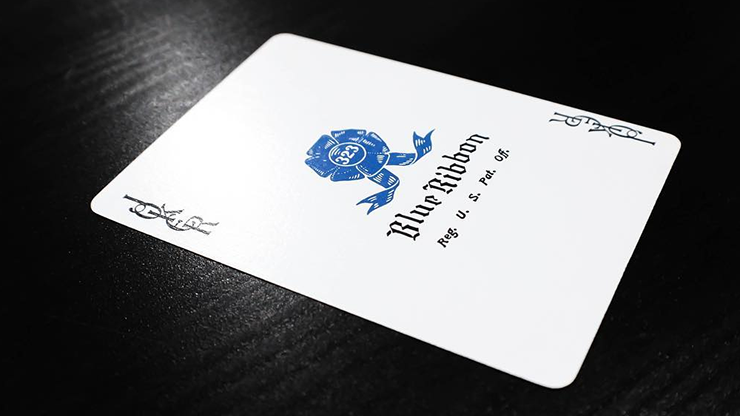
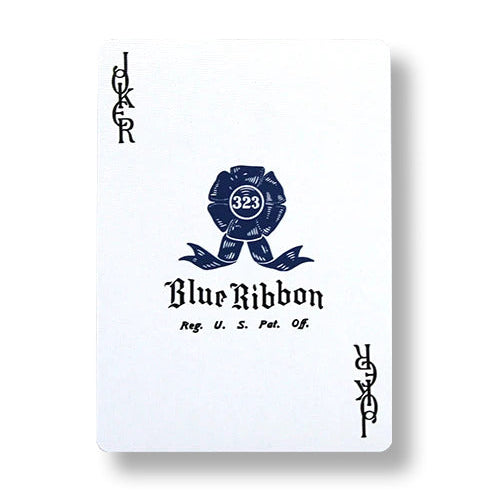
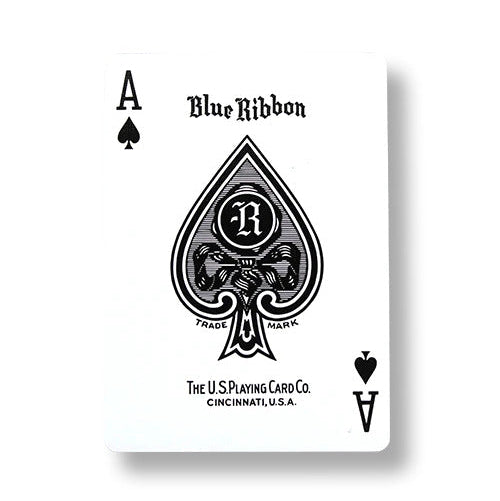
Using surviving vintage decks as reference, designers carefully reconstructed the original elements: the 323 rosette back, the blue prize ribbon emblem on the tuck, and the elegant Ace of Spades with its “R” monogram and trade‑mark scrollwork. The goal was not nostalgia for its own sake, but a working recreation that captures how a premium American deck would have looked and felt on a card table in the first half of the 20th century.
Design That Honors the Original
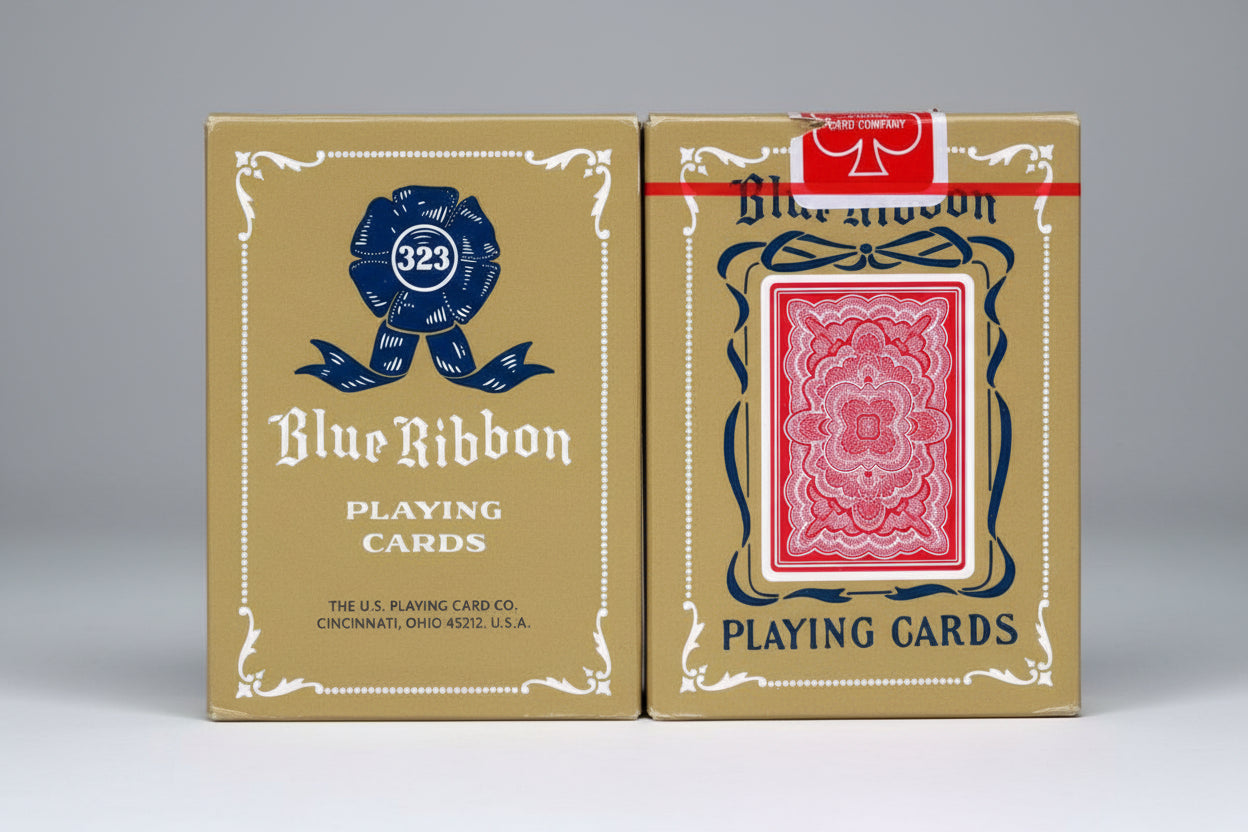
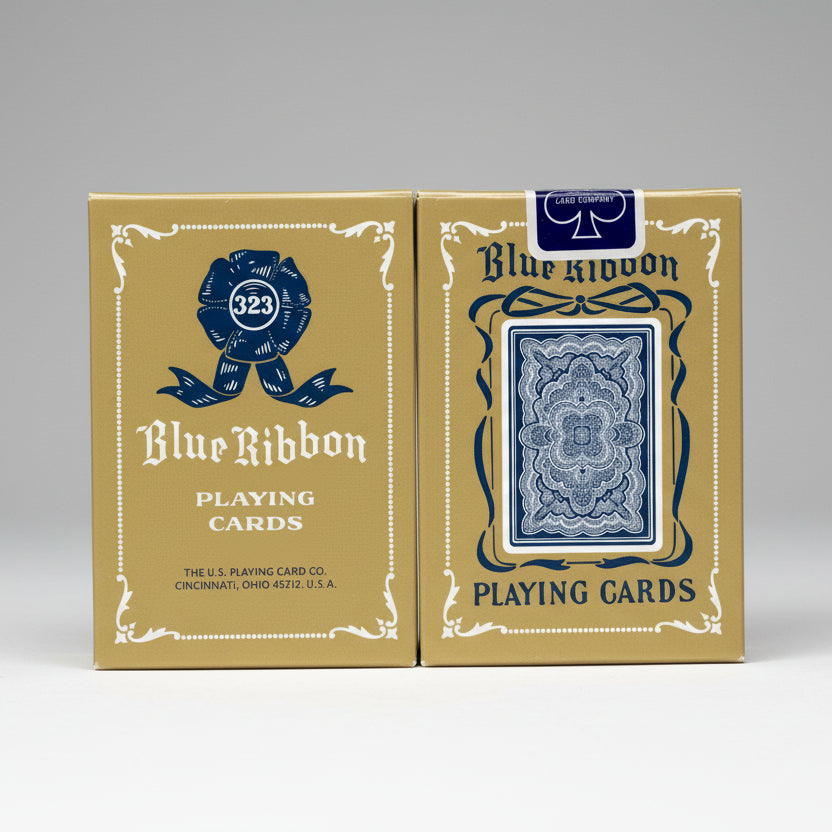
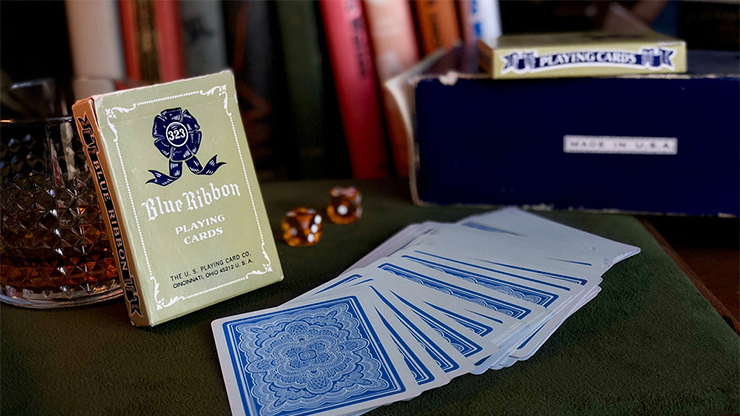
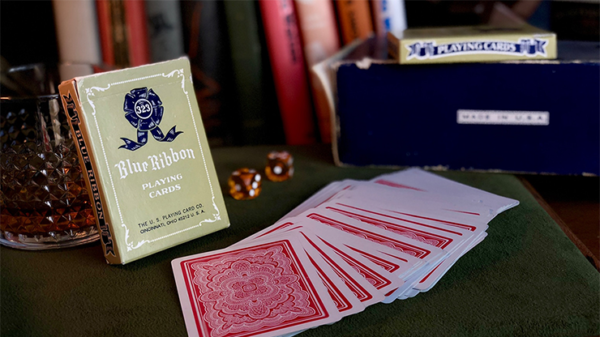
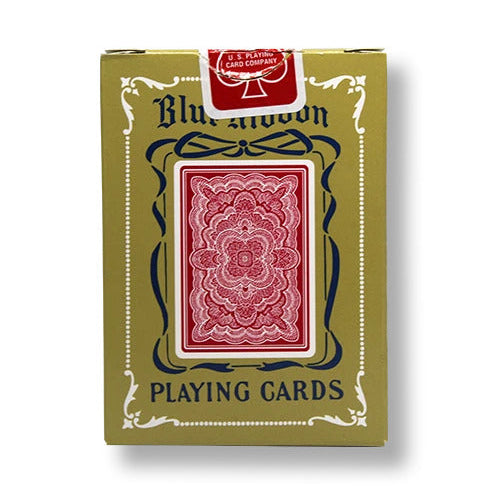
At a glance, the tuck box tells the story. A muted gold panel frames the bold blue ribbon seal, marked “323,” with delicate white scrollwork echoing the engraved style of early USPCC artwork. On the back of the box, the full rosette back design is displayed in miniature—a dense, symmetrical burst of linework that feels more like currency engraving than a modern logo. Put the box on a shelf or bar cart and it instantly reads as vintage, yet the typography and layout are crisp enough to sit comfortably alongside contemporary decks.
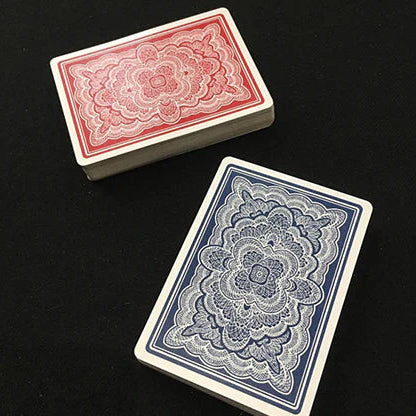
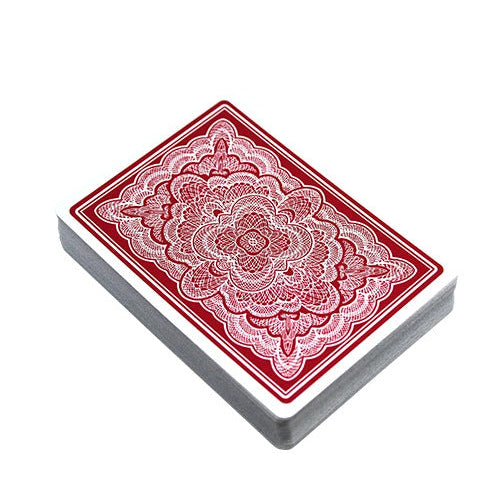
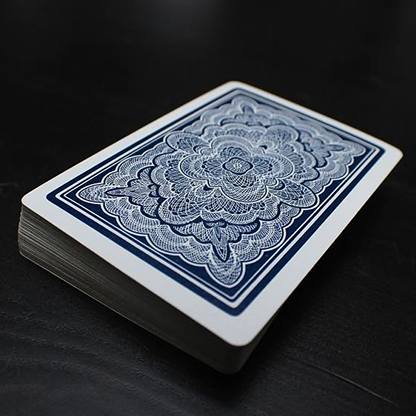
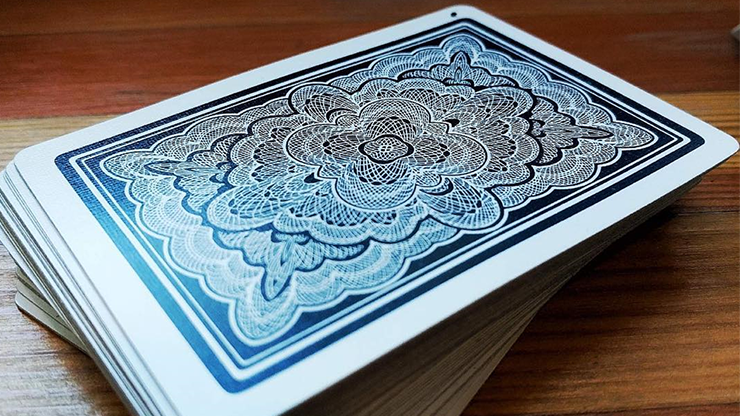
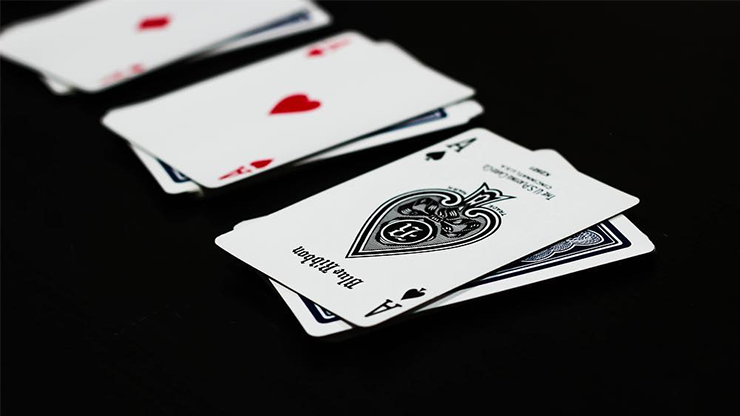
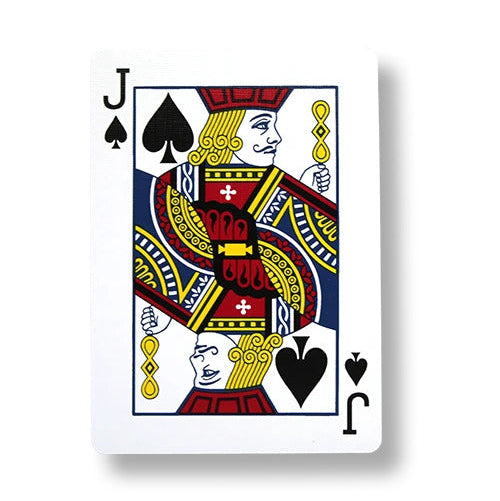
The cards themselves preserve that engraved aesthetic without sacrificing clarity. The red and blue backs both use the same rosette pattern: nested petals and fine cross‑hatching radiate from the center, framed by a classic white border that keeps spreads clean and familiar. On the faces, Blue Ribbon uses standard USPCC indices and courts, so values and suits are instantly legible in a fast game. The real flourish is the Ace of Spades, which carries a large spade emblem with a ribbon‑wrapped “R” at its heart—a quiet signature that grounds the deck in its own identity without overwhelming the layout.
Familiar Faces, Practical Extras
Inside each deck you’ll find the full complement of 52 standard cards plus thoughtful extras that make the reprint as practical as it is nostalgic. Three matching Blue Ribbon jokers provide options for table games or magic routines that rely on multiple identical jokers, while a blank‑face card gives performers a versatile gaff without breaking the deck’s visual consistency. Because the pips and courts follow the classic USPCC style, players never have to “learn” the artwork—your eye reads the layout as quickly as it would on a standard Rider Back.
Vintage‑Inspired Handling & Performance
Although the artwork looks like it stepped out of an antique card room, the handling is firmly modern. The 2018 Blue Ribbon is printed in the USA by the United States Playing Card Company on crushed premium stock with a linen, air‑cushion style finish, giving the deck a thin profile and soft flex straight from the box. The embossed surface provides enough texture for smooth spreads and fans, while the stock retains the snap needed for riffle shuffles, faros, and tabled work. In use, the deck feels supple but durable, breaking in quickly without collapsing over time.
For Players, Magicians, and History‑Minded Collectors
The Blue Ribbon 323 reprint is more than a decorative throwback; it’s a functional bridge between eras. For card players, it offers a refined alternative to off‑the‑shelf decks—something that elevates home games without feeling too precious to shuffle. For magicians, the thin stock, standard faces, and included gaffs make it a natural worker that quietly communicates taste and attention to detail. And for collectors interested in the evolution of American playing cards, Blue Ribbon is a chance to experience a historically significant design the way it was meant to be used: across green felt, under warm light, in the middle of a well‑contested hand.