Most people do not think much about their playing cards—until a cheap deck starts sticking, bending, or falling apart halfway through the night.
The best playing cards for game night depend on what your group plays, how often you meet, and whether you value durability, traditional handling, easy readability, or low replacement cost. A weekly poker group may benefit from long-lasting plastic cards, while a casual family table may be perfectly served by an affordable paper deck.
This guide compares the best playing cards for game night by brand, material, card size, index, durability, price, and intended use.
For a broader comparison of the major manufacturers and product lines, see our Best Playing Card Brands guide.
Quick answer: Choose Copag for durable, frequent mixed-game use; Bicycle for the most familiar all-purpose paper deck; Maverick for budget-friendly play; KEM for a premium acetate experience; Bee for traditional casino-style paper handling; and jumbo-index cards when readability is the priority.
Shop now: Game Night Playing Cards | Playing Card Bricks & Bulk Decks
Best Game Night Playing Cards at a Glance
| Category | Top Choice | Best For |
|---|---|---|
| Durable all-around choice | Copag | Frequent mixed-game nights, poker, bridge, canasta, and easier cleaning |
| Familiar everyday choice | Bicycle | Family games, casual poker, solitaire, magic, and general use |
| Budget choice | Maverick | Casual groups, backup decks, bulk purchases, and regular paper-card play |
| Premium choice | KEM | Premium poker, bridge, canasta, and players who prefer acetate |
| Traditional casino paper | Bee | Poker-style tables and players who prefer firm traditional paper cards |
| Classic game-focused choice | Hoyle | Family games, jumbo index, bridge, pinochle, and practical specialty formats |
| European alternative | Modiano | Players comparing paper, PVC, acetate, poker-size, and bridge-size options |
| Best readability | Jumbo Index Cards | Large tables, mixed-age groups, dim rooms, and easier card recognition |
What Makes a Good Game Night Deck?
A good game-night deck should be comfortable to shuffle, easy to read, appropriate for the game, and affordable enough that people are not afraid to use it.
Important features include:
- Reliable handling: Cards should shuffle, deal, and gather without excessive sticking.
- Clear readability: The index should be easy for everyone at the table to recognize.
- Correct format: Poker size, bridge size, pinochle, euchre, canasta, or another specialty configuration may be appropriate.
- Suitable material: Paper provides traditional handling, while plastic provides greater durability and moisture resistance.
- Reasonable value: Occasional groups may prioritize purchase price; weekly groups may save money with longer-lasting cards.
- Available replacements: Regular hosts benefit from using decks that are easy to replace or purchase in matching sets.
The best deck is not necessarily the most expensive one. It is the deck that fits how your group actually plays.
Best Durable All-Around Choice: Copag
For hosts who play regularly and want a deck they do not have to replace frequently, Copag 100% plastic playing cards are one of the strongest all-around choices.
Copag offers poker-size and bridge-size products, regular and jumbo indexes, single decks, double-deck sets, four-color decks, and other configurations. That makes the brand useful for poker, bridge, canasta, spades, hearts, rummy, and mixed game nights.
- Durable 100% plastic construction
- Better resistance to spills and humidity than paper
- Many size and index combinations
- Suitable for frequent play
- Available in single decks and coordinated sets
Best for: Weekly groups, mixed-game nights, poker, bridge, canasta, and long-term value.
Best Familiar Everyday Choice: Bicycle
If you want something almost everyone at the table recognizes, Bicycle playing cards remain one of the safest general-purpose choices.
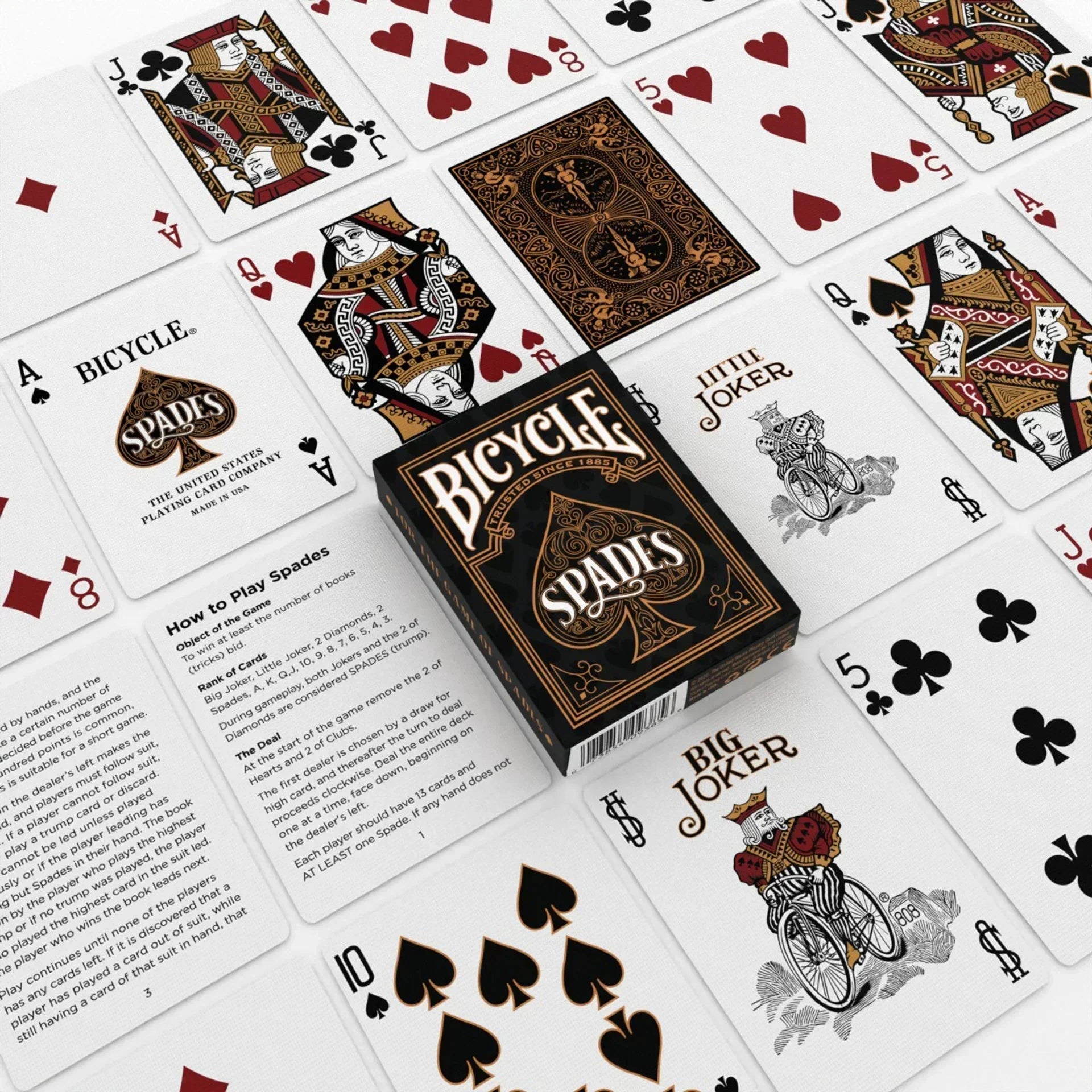
Bicycle works well for family games, home poker, solitaire, magic, and casual group play. The brand offers a broad range of standard decks, jumbo-index options, bridge cards, pinochle decks, licensed designs, and collector editions.
- Familiar American playing card design
- Traditional paper handling
- Broad selection of games, themes, and formats
- Easy to replace
- Suitable for casual players and experienced card handlers
Best for: General home play, family games, casual groups, solitaire, and familiar all-purpose use.
Best Budget Choice: Maverick
Maverick playing cards are a practical choice when affordability matters.
Maverick makes sense when you need backup decks, multiple decks for a larger gathering, paper cards for regular casual use, or lower-cost decks that can be replaced without much concern.
- Affordable everyday paper cards
- Good option for backups and larger groups
- Available in standard and jumbo-index formats
- Pinochle and euchre options available
- Useful for bricks and bulk purchases
Best for: Casual play, larger groups, backup decks, and value-focused buying.
Best Premium Choice: KEM
If you want a genuine premium upgrade, KEM playing cards are a leading option.
KEM cards use cellulose acetate rather than ordinary paper or standard PVC. They have a distinctive flexible feel and are widely chosen for premium poker, bridge, and canasta play.
- Premium cellulose acetate material
- Flexible and resilient handling
- Strong long-term durability
- Poker-size and bridge-size options
- Suitable for frequent premium play
Best for: Serious players, premium tables, bridge clubs, canasta groups, and anyone who already prefers acetate.
Best Traditional Casino-Style Paper Choice: Bee
For players who prefer traditional paper cards, Bee playing cards belong near the top of the list.
Bee is strongly associated with casino-style paper handling and borderless back designs. The cards are particularly attractive for poker-style tables and players who prefer the feel, stiffness, and shuffle feedback of paper rather than plastic.
- Traditional casino-style paper construction
- Firm, familiar handling
- Popular for poker and blackjack-style play
- Standard and jumbo-index products available
- Borderless back options
Best for: Paper-card fans, poker tables, and traditional casino-style handling.
Best Classic Game-Focused Choice: Hoyle
Hoyle playing cards are a strong choice for practical household and specialty game formats.
Hoyle is especially useful when you want familiar paper cards, jumbo indexes, bridge-size products, pinochle decks, waterproof cards, or other game-focused options.
- Familiar traditional card faces
- Paper and plastic options depending on the product
- Jumbo-index and bridge-size selections
- Pinochle and specialty game formats
- Practical choice for family and social play
Best for: Family games, pinochle, bridge, jumbo-index play, and groups that prefer classic game-focused cards.
Best European Alternative: Modiano
If you want something different from the usual American brands, Modiano playing cards are worth comparing.
Modiano offers paper, PVC plastic, and selected cellulose acetate products in poker-size and bridge-size formats. The exact feel and material vary by product, so review each listing carefully.
- Paper, PVC, and selected acetate options
- Bridge-size and poker-size choices
- Distinctive European designs and handling
- Strong choices for poker, bridge, and traditional games
- Single decks and double-deck sets
Best for: Players seeking a European alternative or comparing several materials and card formats.
Best for Easy Readability: Jumbo Index Cards
If your game night includes a large table, mixed-age group, dim lighting, or players who find traditional indexes difficult to read, jumbo-index playing cards can make a substantial difference.
The larger corner numbers, letters, and suit symbols make cards easier to identify across the table. Jumbo index is particularly useful for community-card poker, tabled melds, and games where several players need to recognize exposed cards quickly.
- Easier to recognize at a glance
- Useful across larger tables
- Available in bridge-size and poker-size formats
- Available in paper, PVC, and acetate products
- Helpful for longer sessions and mixed groups
Compare the formats in Jumbo Index vs Standard Index Playing Cards.
Best Playing Cards by Game
Poker
Both paper and plastic cards can work well for poker. Paper provides familiar snap and casino-style handling, while plastic offers greater durability and resistance to spills.
Home poker can use poker-size or bridge-size cards. Many professional-style poker products use narrower bridge-size cards because they can be easier to shuffle and deal repeatedly.
Good starting points include:
- Aristocrat for premium traditional paper cards
- Bee for casino-style paper handling
- Bicycle for familiar casual play
- Copag for durable 100% plastic cards
- KEM for premium acetate
Read Best Playing Cards for Poker.
Bridge
Bridge players normally prefer bridge-size playing cards. The narrower width makes a thirteen-card hand easier to hold and manage.
For frequent club play, consider KEM, Copag, or Modiano plastic and acetate products. For traditional paper bridge cards, consider Congress, Bicycle, or Hoyle.
Read Best Cards for Bridge Players or learn the game with How to Play Bridge.
Canasta
Canasta uses multiple decks and can involve large hands, tabled melds, and extended sessions. Matching double-deck sets, bridge-size cards, and easy-to-read indexes can all be useful.
Plastic or acetate cards are especially practical for groups that meet regularly. Copag, KEM, and Modiano are strong premium choices, while paper sets remain suitable for occasional play.
Browse Canasta Playing Cards or read How to Play Canasta.
Euchre
Euchre normally uses a shortened deck, and players hold only five cards. Physical card width and index size are therefore largely matters of personal preference.
Bicycle, Maverick, and Hoyle offer practical options, including game-specific products. Dedicated euchre decks can eliminate the need to remove unused cards before every game.
Browse Pinochle & Euchre Playing Cards or read How to Play Euchre.
Pinochle
Pinochle requires a specialized card composition, so a dedicated pinochle deck is usually the easiest choice. Hoyle, Bicycle, and Maverick are practical starting points.
Jumbo index can make melds and played cards easier to read, while standard index provides a more traditional appearance.
Browse Pinochle Playing Cards or read How to Play Pinochle.
Spades
Spades can be played comfortably with either bridge-size or poker-size cards. Bicycle, Bee, Hoyle, and Maverick are practical paper choices, while Copag is a strong upgrade for groups that play frequently.
Browse Spades Playing Cards or read How to Play Spades.
Hearts
Hearts works well with almost any standard deck. Paper cards are an affordable and familiar choice, while jumbo index can improve visibility as cards are played to the center of the table.
Browse Hearts Playing Cards or read How to Play Hearts.
Rummy and Gin Rummy
Basic Rummy can be played with any standard 52-card deck. Bridge-size cards may be helpful when players hold larger hands, while paper or plastic can be selected according to playing frequency. Gin Rummy is a related two-player game with different rules for melding, knocking, and scoring.
Learn the complete Basic Rummy rules in our How to Play Rummy guide.
Solitaire
Solitaire rarely requires premium durability or jumbo indexes. A familiar paper deck such as Bicycle, Hoyle, Maverick, or Aviator is often an ideal choice.
Mixed Family Game Nights
For groups that play a little of everything, select a dependable standard deck with clear faces and an index everyone can read.
Good mixed-use choices include:
- Copag for frequent play and durability
- Bicycle for familiar traditional handling
- Hoyle for game-focused formats
- Maverick for lower-cost everyday use
- Jumbo-index cards when readability is important
Learn How to Play Classic Card Games
- How to Play Pinochle
- How to Play Euchre
- How to Play Canasta
- How to Play Bridge
- How to Play Spades
- How to Play Hearts
- How to Play Rummy
Plastic vs Paper for Game Night
| Feature | Plastic Cards | Paper Cards |
|---|---|---|
| Durability | Usually better for frequent use | Wear faster under repeated play |
| Handling | Smooth, flexible, and resilient | Traditional texture, snap, and shuffle feedback |
| Moisture resistance | High | Limited |
| Cleaning | Many can be carefully wiped clean | Should be kept dry |
| Initial cost | Usually higher | Usually lower |
| Best fit | Weekly groups, clubs, poker, bridge, canasta, outdoor play | Casual games, family use, solitaire, magic, collecting |
For a complete comparison, read Plastic vs Paper Playing Cards.
Card Size and Index for Game Night
Material is only one decision. You should also consider the physical card dimensions and the size of the corner markings.
Poker size
Poker-size cards are the familiar wider format used by many household, magic, cardistry, and collector decks.
Bridge size
Bridge-size cards are approximately one-quarter inch narrower. They are useful for bridge, canasta, casino-style poker, and players who find a wider deck difficult to hold or shuffle.
Standard index
Standard index uses smaller, traditional corner markings. It provides a classic appearance and leaves more open space on the card face.
Jumbo index
Jumbo index uses larger numbers, letters, and suit symbols for easier recognition across a table.
Read:
Should You Buy Game Night Cards in Bulk?
Buying playing cards in bulk can make sense when you host regularly, operate several tables, play multi-deck games, or want fresh backup decks ready to use.
Consider bulk cards when:
- You host weekly or monthly game nights
- Several tables may be active at once
- Your group regularly plays poker, bridge, canasta, or pinochle
- You want matching replacement decks
- You prefer a lower per-deck price
- Paper decks are replaced frequently
Common quantities include:
- Two-deck sets: Useful for bridge, canasta, and rotating decks between hands
- Half bricks: Six decks for smaller groups or occasional hosts
- Bricks: Twelve decks for regular home games, clubs, and multiple tables
- Cases: Larger quantities for organizations, events, retailers, and high-volume use
Browse Playing Card Bricks & Bulk Decks or read the Bulk Playing Cards Buyer’s Guide.
How Many Decks Should a Game Night Host Own?
At minimum, keep one usable deck and one backup deck available. A card can become damaged, lost, bent, or accidentally marked during play.
You may need more when:
- Several tables are used at the same time
- The game requires two or more matching decks
- Players prefer different sizes or index styles
- You alternate decks between hands
- You use paper cards frequently and replace them as they wear
A practical game-night setup might include a familiar paper deck, a durable plastic set, and at least one jumbo-index option.
Which Game Night Cards Should You Choose?
Choose Copag when:
- You play frequently
- Spills and moisture are concerns
- You want a durable mixed-game deck
- You prefer 100% plastic cards
Choose Bicycle when:
- You want a familiar all-purpose paper deck
- Your group plays casually
- You want a broad selection of formats and designs
- You prefer traditional handling
Choose Maverick when:
- Price is the priority
- You need backup decks
- You are buying for a larger group
- You want affordable paper cards
Choose KEM when:
- You want a premium long-lasting deck
- You prefer flexible acetate cards
- You play poker, bridge, or canasta regularly
- Upfront cost is less important than premium feel
Choose Bee when:
- You prefer traditional casino-style paper cards
- Your group primarily plays poker
- You enjoy firmer paper handling
- You want classic borderless back options
Choose Hoyle when:
- You want practical game-specific formats
- You need jumbo index, bridge, or pinochle cards
- You prefer a familiar classic brand
- Your table plays several traditional games
Final Thoughts
The best playing cards for game night depend on how your table actually plays.
Copag is a strong durable choice for frequent mixed-game use. Bicycle remains one of the easiest familiar recommendations for casual home play. Maverick is useful when affordability and replacement cost matter. KEM provides a premium acetate experience, while Bee offers traditional casino-style paper handling. Hoyle is a practical choice for classic games and specialty formats, and Modiano provides a broad European alternative.
The key is to match the deck to the games, players, and frequency of use rather than simply buying the cheapest or most expensive option.
Browse the complete Game Night Playing Cards collection.
Frequently Asked Questions
What type of playing cards are best for game night?
Plastic cards are a strong choice for frequent game nights because they resist wear and moisture. Paper cards are often better for casual groups that prefer traditional handling and lower initial cost.
What is the best all-around playing card brand for game night?
Copag is a strong durable all-around choice for frequent mixed-game use. Bicycle is a familiar paper choice for casual household games, while Hoyle offers useful game-specific formats.
Are plastic cards better than paper cards for game night?
Plastic is generally better for frequent use, spills, cleaning, and long-term durability. Paper is generally better for traditional feel, lower upfront cost, magic, collecting, and casual play.
Are jumbo-index cards better for game night?
Jumbo-index cards are better when easy readability is the priority. Standard index remains a good choice for groups that prefer a traditional appearance and can read smaller markings comfortably.
What size playing cards are best for bridge?
Bridge-size cards are normally the best choice for bridge because their narrower width makes a thirteen-card hand easier to hold.
What size playing cards are best for poker?
Both bridge-size and poker-size cards can be used for poker. Poker size is familiar for home games, while many professional-style poker products use bridge-size cards for easier repeated handling.
How many decks should I keep for game night?
Keep at least one primary deck and one backup. You may need additional decks for multiple tables, canasta, bridge rotation, pinochle, or groups that prefer different card formats.
Should regular game-night hosts buy cards by the brick?
Buying a brick can be economical for regular hosts, clubs, and multiple-table events because it lowers the price per deck and ensures fresh replacement cards are available.
What cards are best for a mixed family game night?
Bicycle, Hoyle, Maverick, and Copag are all practical choices. Choose paper for familiar lower-cost handling, plastic for frequent use, or jumbo index when easier readability matters.